

What does an N95 mask mean to a farmworker clinic in Salinas? Or a box of gloves to an emergency response team preparing for the next disaster? For the nurses and physicians at the end of a long shift, protective gear is routine. For a local nonprofit providing care on a tight supply budget, it can be the difference between opening the doors or not.
The gap between abundance in one part of the healthcare system and scarcity in another, is exactly what MedCycle Network was built to close. And it is exactly why our recent collaboration with MemorialCare matters.
A health system built on doing good
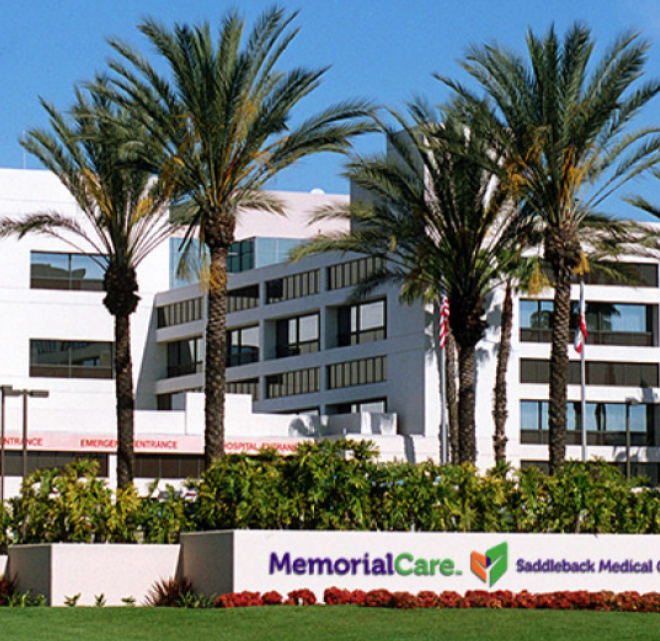
MemorialCare is a nonprofit integrated health system anchored by four leading hospitals: Long Beach Medical Center, Miller Children’s & Women’s Hospital, Orange Coast Medical Center, and Saddleback Medical Center, and a network of outpatient centers spanning Orange and Los Angeles Counties. Their guiding principle is simple: Caring is Our Calling, and Doing Good is Our Commitment. That commitment extends well beyond their own walls.
When MemorialCare’s teams identified high-quality surplus medical supplies, they didn’t let it sit in a warehouse or send it to a landfill. They partnered with MedCycle Network to expand access to healthcare.
Two Truck Loads. One shared mission.
The donation MemorialCare entrusted to MedCycle Network was substantial: gloves, shoe covers, face shields, N95 masks, and other medical supplies, enough to fill two large truck loads. These are the supplies that stand between a healthcare worker and the patients they serve. Gloves that allow a nurse to conduct an exam safely. Face shields that let a frontline worker lean in without hesitation. N95 masks that mean a first responder can enter a smoke-filled room or a contaminated site and come home healthy.
The protective equipment that health systems stock, and sometimes cannot fully use, represents an enormous reservoir of potential care. When MemorialCare chose to redirect that surplus rather than discard it, they turned inventory into impact.
“The most powerful innovations in healthcare are often the simplest: connecting resources to need with precision and trust. MedCycle Network has built exactly that, a system that turns surplus into care without waste, without friction, and without losing sight of the patient at the end of the chain. MemorialCare is proud to be part of it, and I would encourage every health system leader looking for high-impact, low-barrier community partnerships to start this conversation." — Barry Arbuckle, Ph.D., Executive Chairman of MemorialCare
Where the supplies went: three communities, three kinds of need
Once the medical surplus donation was received and catalogued, MedCycle Network matched the surplus to three nonprofit partners whose missions aligned with the supplies available.
Fighting isolation and hunger: a multi-service community partner
A broad assortment of supplies: gloves, shoe covers, face shields, masks, and more, went to a nonprofit partner that addresses the intersecting crises of isolation, hunger, and limited opportunity for children, families, and seniors. This organization provides nutritious food, clothing, home repair support, elderly services, and other essentials to neighbors who have nowhere else to turn. For their staff and volunteers, many of whom provide hands-on care in people’s homes, a reliable supply of personal protective equipment is not a luxury. It is what allows them to show up, day after day, for the people who depend on them.
Protecting the hands that feed us: farmworker health in Salinas
N95 masks from the MemorialCare donation were directed to a nonprofit organization in Salinas, California, dedicated to protecting the health of agricultural workers, the farmworkers whose labor sustains the food supply for millions of Californians. In the fields and packing houses of the Salinas Valley, respiratory protection is not a precaution; it is a daily necessity.
Ready when it counts: disaster preparedness in Sacramento
An assortment of supplies: gloves, shoe covers, face shields, and more, went to a Sacramento-based nonprofit that provides disaster preparedness and emergency response. In California, where wildfires, floods, and air quality emergencies affect communities with increasing frequency, the ability to respond quickly and safely depends on having the right equipment ready before the crisis hits. For emergency responders working in the field, every item in this delivery is a tool for protecting both the people they serve and themselves.
“MemorialCare exemplifies what it looks like when a health system treats surplus as a community asset rather than a problem. Their donation reached farmworkers, disaster responders, and families facing poverty across California.” — Eric Talbert, CEO and Co-Founder, MedCycle Network
Why this model works and why it scales
The MemorialCare collaboration reflects something MedCycle Network has seen again and again: health systems want to do more with their surplus. They have sustainability goals, community benefit commitments, and operations teams that understand the issue firsthand. What they often lack is a trusted, efficient partner to handle the logistics of getting supplies from their loading dock to a clinic’s door.
MedCycle Network provides exactly that. As with our partnerships with UCSF Health, CommonSpirit Health, Sharp HealthCare, and other health systems, MemorialCare trusted us to catalogue, match, and deliver their surplus to communities where it would increase access to health for our neighbors. Every pallet is tracked. Every recipient is a vetted nonprofit partner. Every delivery is documented.
This is not a one-time gesture. It is a repeatable, scalable model, and the MemorialCare collaboration is proof that it works at volume.
Gratitude and what comes next
MedCycle Network is grateful to every person at MemorialCare who made this collaboration possible, from the sustainability and operations teams who identified and prepared the donation, to the leadership who said yes. Transforming surplus into care requires time, trust, and coordination at every step, and we do not take that contribution lightly.
We look forward to deepening this partnership and finding new opportunities to put MemorialCare’s commitment to doing good into practice, one delivery, one clinic, one community at a time.
Partner with MedCycle Network
Does your hospital have medical surplus to donate? MedCycle Network makes redistribution simple, traceable, and mission-aligned. Learn how to become a hospital partner at medcyclenetwork.org, or reach out directly to start a conversation.